
Chinese New Year gifts
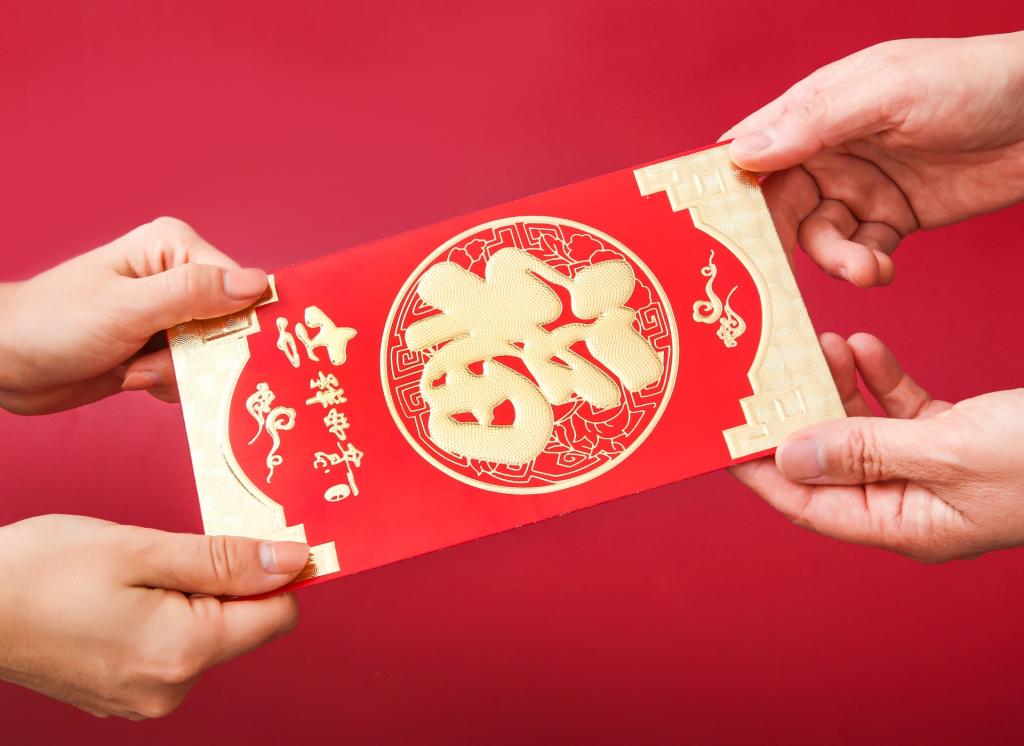
New Year presents are not the same as birthday presents. They carry the puns and colours of the festival. The first, and the one that stands for all the others, is money in red paper.
Red envelopes

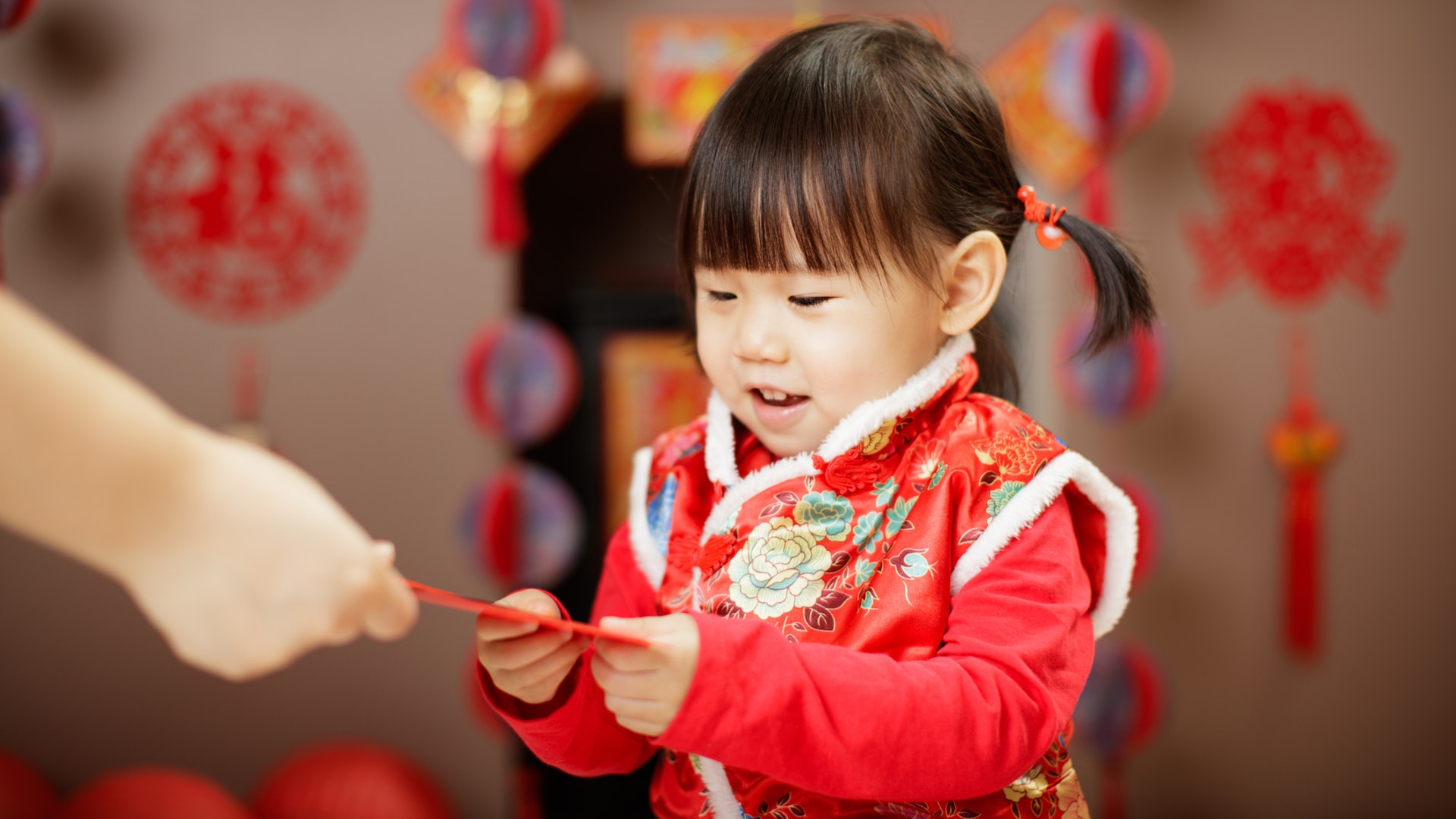
A hongbao 红包 (hóngbāo) is a gift of money in a red envelope. In Cantonese it is lai si or lai see; in Minnan, ang pow. At New Year the money inside is also called yasuiqian. Married adults give to children — and, in many families, to unmarried younger relatives. The receiver thanks the giver with a good wish. The amount is chosen: eights, or 168, because eight sounds like prosperity. A hundred yuan notes are common. The sum also marks the giver’s standing and the closeness of the tie. The same red packet is used at weddings and birthdays. Red is the colour of bridal dress and of the children’s New Year clothes; it is the colour of happiness. The guide that describes hongbao also records the other use of the same envelope in China: a bribe. The colour does not tell those two gifts apart.
Elsewhere the custom has cousins. In Vietnam the packets are li xi, close in sound to Cantonese lai see. In Japan and Korea, otoshidama for children at New Year comes in a white envelope with the receiver’s name. Malaysian Muslims give money in green packets with Islamic motifs for Eid. In Thailand, Chinese Thai give ang pow or tae ea.
What else is given
Food. Oranges and mandarins, because their name is close to “gold”. Baskets of fruit. Boxes of sticky-rice cakes and traditional sweets. (Mooncakes belong to mid-autumn; they still appear in the same magazine list of festive food gifts.)
Tea. A fine tea — Pu-erh, Longjing, oolong — is respect and a wish for health.
Charms and decorations. Small dragons, fish, coins, characters of luck; red lanterns to hang.
Red clothes. Parents buy red for children. Couples may give matching outfits. People whose animal is the year’s animal are given red underwear — the same ben ming nian rule as on the Fire Goat page.
Calligraphy and painting with a lucky phrase, made for the person.
What not to give
Black or white packing or objects: mourning colours.
Sharp things — knives, scissors, needles — because they cut, and a cut is read as a break between people.
Unlucky numbers. Four sounds like “death”. Seven can sound like “to lose”. Prefer six, eight, nine. Even numbers, for stability; a single shoe, or one of a pair, reads as loneliness.
Clocks and watches. “Clock” (zhōng) is close to “the end”, “to die”. A watch measures the time that is left. Neither is a New Year gift.
The greeting that goes with the envelope is Gong Xi Fa Cai. The fifteen days say when it is handed over: at dawn after the reunion dinner, and again when guests come.