
Measure word
- 个 gè (classifier used before a noun that has no specific classifier); (bound form) individual attested in use
Stroke order
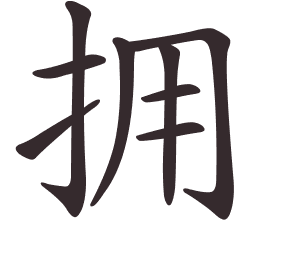
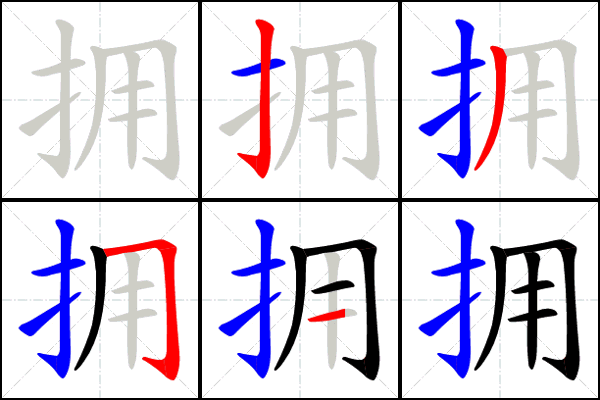 Show the animation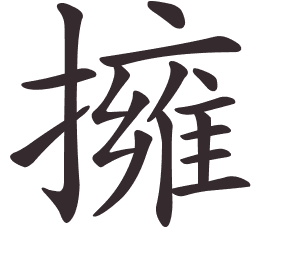
Stroke data from Make Me a Hanzi, derived from the Arphic PL fonts under the Arphic Public License.
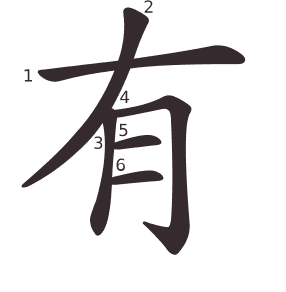
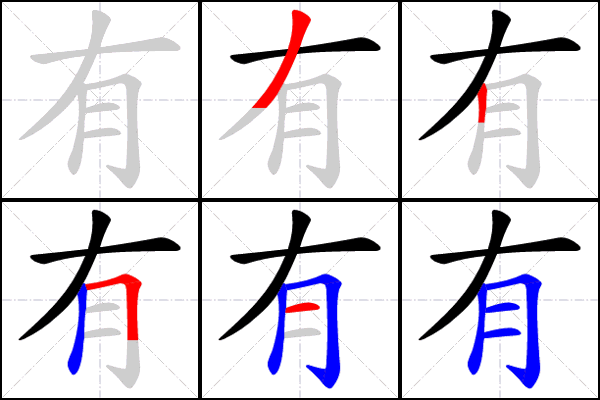 Show the animation
 Stroke data from Make Me a Hanzi, derived from the Arphic PL fonts under the Arphic Public License.
How it used to be written
拥
These are the forms of 擁, the traditional character: 拥 is a twentieth-century simplification, found in no ancient corpus.
-
 Small seal script
 -
 Clerical script 曹魏
有
-
 Oracle bone script 商
 -
 Clerical script 東漢
 - See all 13 forms
Forms, sources and dates: the 字形演變 database of 小學堂, Academia Sinica, public domain (CC0).
Examples
-
他虽然号称自己是个社会主义者,但是其实他拥有两套房子还有一辆劳斯莱斯。
He claims to be a socialist, and yet he has two houses and a Rolls Royce.
-
在所有的游戏里有最重要的特点: 它们都拥有法则。
The most important feature of all games is that they are governed by rules.
-
她大约拥有 2000 本书。
She has about 2,000 books.
-
我们值得拥有。
Because we're worth it.
-
我终于拥有了一整套!
I've finally got the whole set!
-
拥有一切的人可能会失去一切。
One who has everything can lose everything.
-
日本并不拥有丰富的自然资源。
Japan is not rich in natural resources.
-
每个人都想要得到无法拥有的东西
Everyone wants what they can't have.