
脱 脫
Measure word
- 个 gè (classifier used before a noun that has no specific classifier); (bound form) individual attested in use
Stroke order

 Show the animation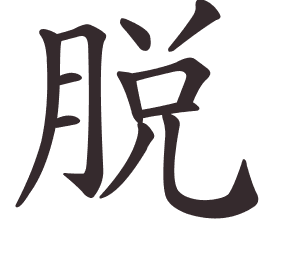
Stroke data from Make Me a Hanzi, derived from the Arphic PL fonts under the Arphic Public License.
How it used to be written
These are the forms of 脫, the traditional character: 脱 is a twentieth-century simplification, found in no ancient corpus.
-
 Warring States script 戰國.秦
 -
 Clerical script 西漢
 - See all 4 forms
Forms, sources and dates: the 字形演變 database of 小學堂, Academia Sinica, public domain (CC0).
Examples
-
他就是那样脱离危险的。
That is how he got out of danger.
-
他成功地逃脱了。
He managed to escape.
-
他把衬衫脱了。
He removed his shirt.
-
他脱了背心。
He took off the wife-beater.
-
他让人们摆脱了奴役。
He liberated the people from bondage.
-
你该摆脱你的坏习惯。
You must rid yourself of bad habits.
-
印度于1947年脱离英国获得独立。
India gained independence from Britain in 1947.
-
在亚洲文化里,习惯在进一个房子或一座寺庙前先脱鞋子。
In Asian culture it's customary to take one's shoes off before entering a house or temple.