
繁体字繁體字 in English
- traditional Chinese character
Stroke order
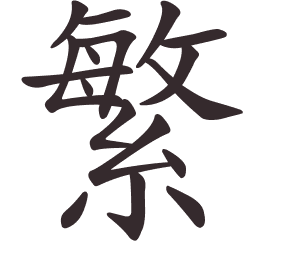
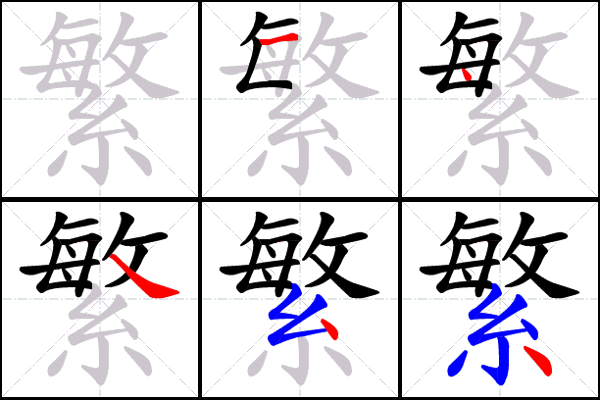 Show the animation
 Stroke data from Make Me a Hanzi, derived from the Arphic PL fonts under the Arphic Public License.
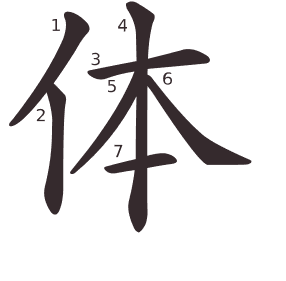
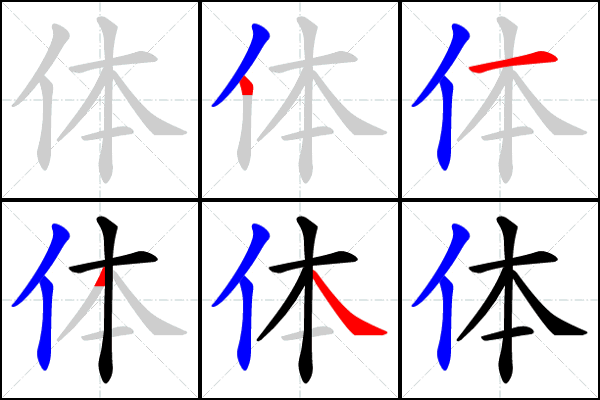 Show the animation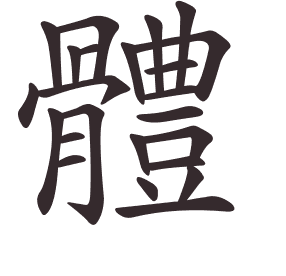
Stroke data from Make Me a Hanzi, derived from the Arphic PL fonts under the Arphic Public License.
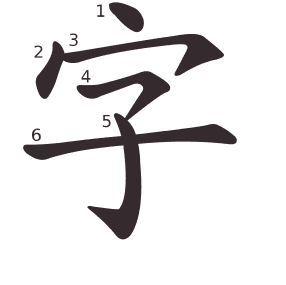
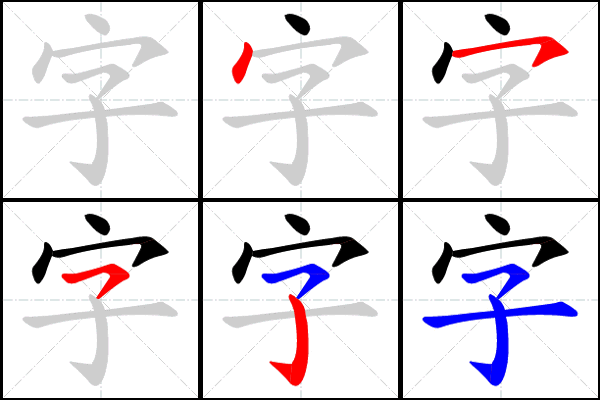 Show the animation
 Stroke data from Make Me a Hanzi, derived from the Arphic PL fonts under the Arphic Public License.
How it used to be written
繁
-
 Bronze script 西周早期
 -
 Clerical script 東漢
 - See all 11 forms
体
These are the forms of 體, the traditional character: 体 is a twentieth-century simplification, found in no ancient corpus.
-
 Bronze script 戰國晚期.晉
 -
 Clerical script 東漢
 - See all 12 forms
字
-
 Bronze script 商代晚期
 -
 Clerical script 東漢
 - See all 9 forms
Forms, sources and dates: the 字形演變 database of 小學堂, Academia Sinica, public domain (CC0).
Examples
-
中国的汉字数量繁多,推行汉字简化的目的,是把结构复杂的繁体字转换成易学易记的简体字,从而提高国民的识字水平。
In China, there is a large number of characters, so the goal of the character simplification was to replace the complex traditional characters with easy to remember simplified characters and increase the literacy rate.
-
我不会写繁体字,但我可以读。
I cannot write traditional characters, but I am fine reading them.
-
这是繁体字。
This is in Traditional Chinese characters.