
Stroke order
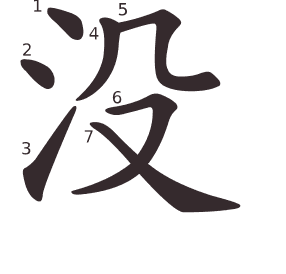
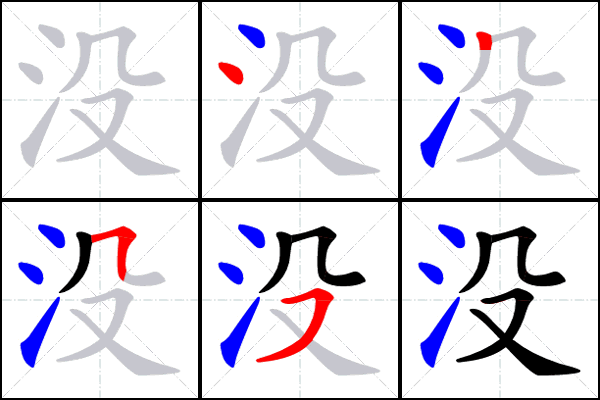 Show the animation
Stroke data from Make Me a Hanzi, derived from the Arphic PL fonts under the Arphic Public License.
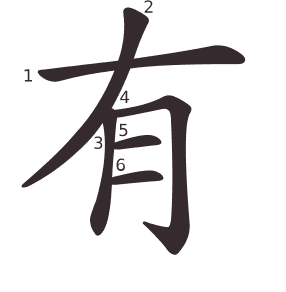
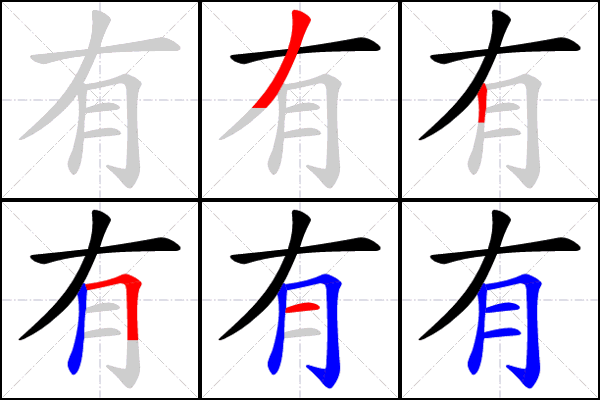 Show the animation
 Stroke data from Make Me a Hanzi, derived from the Arphic PL fonts under the Arphic Public License.
How it used to be written
没
These are the forms of 沒, the traditional character: 没 is a twentieth-century simplification, found in no ancient corpus.
-
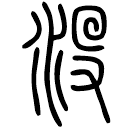 Small seal script
 -
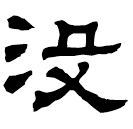 Clerical script 西晉
 - See all 6 forms
有
-
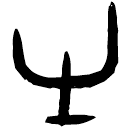 Oracle bone script 商
 -
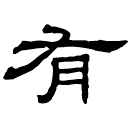 Clerical script 東漢
 - See all 13 forms
Forms, sources and dates: the 字形演變 database of 小學堂, Academia Sinica, public domain (CC0).
Examples
-
“上周你看电视了吗?”“没有,我没看。”
"Did you watch TV last week?" "No, I didn't."
-
“你有没有兄弟姐妹?” “没有,我是个独生子女。”
"Do you have any siblings?" "No, I'm an only child."
-
“她有狗吗?” “没有。”
"Does she have a dog?" "No, she doesn't."
-
Tom没有礼貌。
Tom has no manners.
-
一个完完全全的不及物动词既没有补语,又没有宾语。
A complete intransitive verb takes neither complement nor object.
-
上周一我没有工作。
I didn't work last Monday.