
声音 聲音
Measure word
- 个 gè (classifier used before a noun that has no specific classifier); (bound form) individual attested
Stroke order
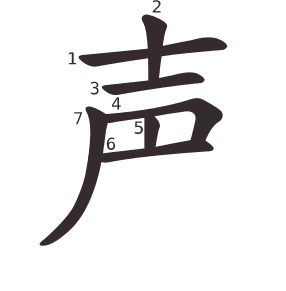
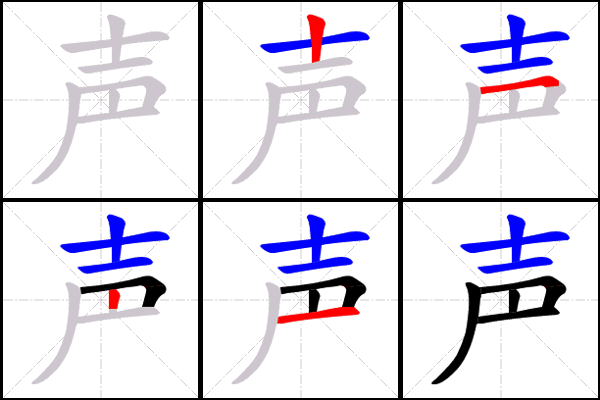 Show the animation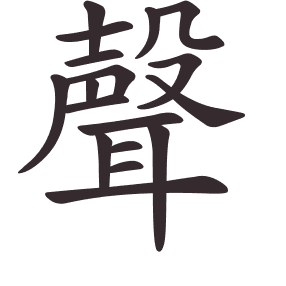
Stroke data from Make Me a Hanzi, derived from the Arphic PL fonts under the Arphic Public License.
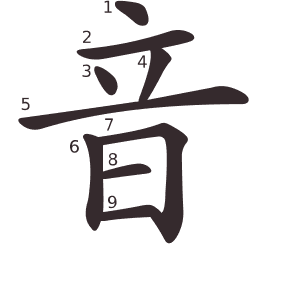
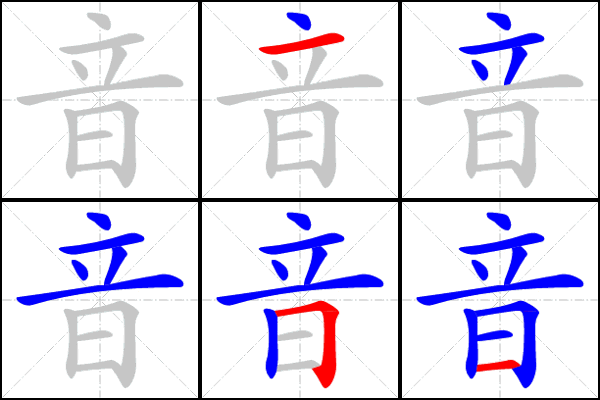 Show the animation
 Stroke data from Make Me a Hanzi, derived from the Arphic PL fonts under the Arphic Public License.
How it used to be written
声
These are the forms of 聲, the traditional character: 声 is a twentieth-century simplification, found in no ancient corpus.
-
 Oracle bone script 商
 -
 Clerical script 曹魏
 - See all 11 forms
音
-
 Bronze script 春秋早期
 -
 Clerical script 東漢
 - See all 11 forms
Forms, sources and dates: the 字形演變 database of 小學堂, Academia Sinica, public domain (CC0).
Examples
-
不要发出声音。
Don't make a noise.
-
他的声音很悦耳。
He has a pleasant voice.
-
你可以毫无问题地辨别孩子们的声音。
You can identify children's voices without any problem.
-
即使您的声音颤抖,也要说出事实。
Speak the truth, even if your voice shakes.
-
奇怪的声音从门后传来。
A strange sound was heard from behind the door.
-
我们听到卧室里有声音。
We heard a voice from the bedroom.