
出其不意,掩其不备
出其不意,掩其不备 in English
- (idiom) Originally, it meant attacking an opponent where they were unprepared and acting before they could defend themselves.
Stroke order
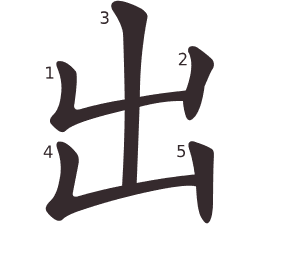
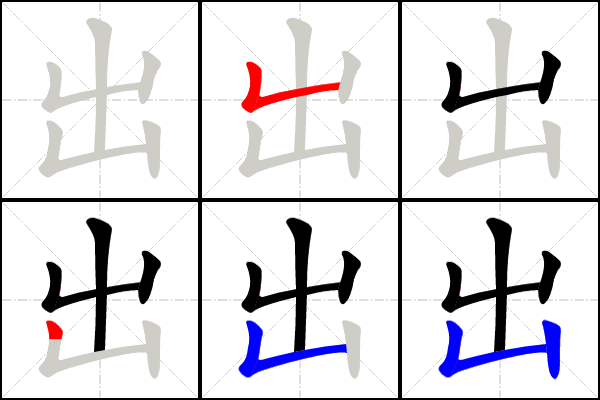 Show the animation
 Stroke data from Make Me a Hanzi, derived from the Arphic PL fonts under the Arphic Public License.
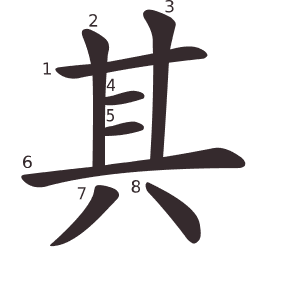
 Show the animation
 Stroke data from Make Me a Hanzi, derived from the Arphic PL fonts under the Arphic Public License.
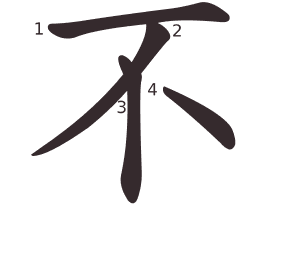
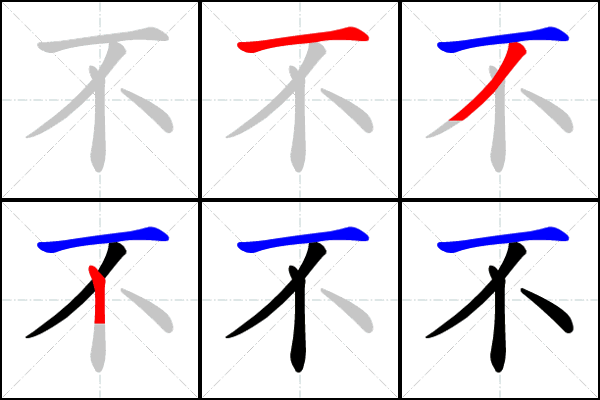 Show the animation
 Stroke data from Make Me a Hanzi, derived from the Arphic PL fonts under the Arphic Public License.

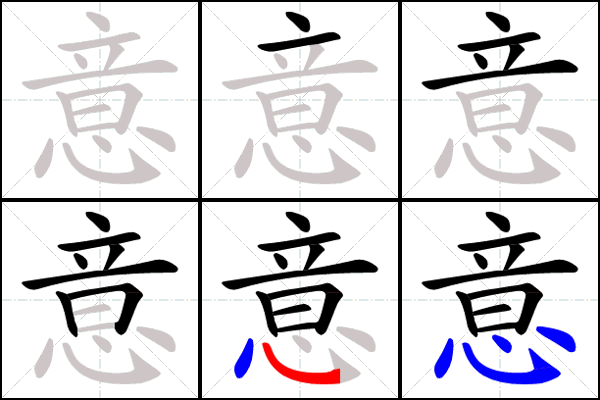 Show the animation
 Stroke data from Make Me a Hanzi, derived from the Arphic PL fonts under the Arphic Public License.

 Show the animation
 Stroke data from Make Me a Hanzi, derived from the Arphic PL fonts under the Arphic Public License.
How it used to be written
出
-
 Oracle bone script 商
 -
 Clerical script 東漢
 - See all 19 forms
不
-
 Oracle bone script 商
 -
 Clerical script 東漢
 - See all 21 forms
意
-
 Warring States script 戰國.秦
 -
 Clerical script 東漢
 - See all 8 forms
掩
-
 Small seal script
备
These are the forms of 備, the traditional character: 备 is a twentieth-century simplification, found in no ancient corpus.
-
 Oracle bone script 商
 -
 Clerical script 東漢
 - See all 17 forms
Forms, sources and dates: the 字形演變 database of 小學堂, Academia Sinica, public domain (CC0).