
个箇 in English
- (classifier used before a noun that has no specific classifier) / (bound form) individual
Measure word
Stroke order
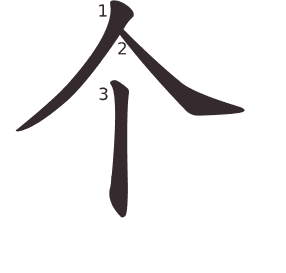
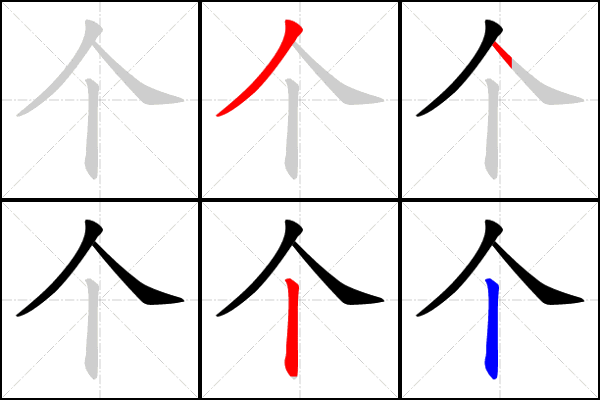 Show the animation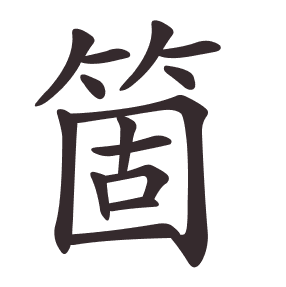
Stroke data from Make Me a Hanzi, derived from the Arphic PL fonts under the Arphic Public License.
How it used to be written
These are the forms of 箇, the traditional character: 个 is a twentieth-century simplification, found in no ancient corpus.
-
 Small seal script
Forms, sources and dates: the 字形演變 database of 小學堂, Academia Sinica, public domain (CC0).
Examples
-
“你去哪儿了?”“我去了火车站送我的一个朋友。”
"Where have you been?" "I have been to the station to see a friend off."
-
“你有没有兄弟姐妹?” “没有,我是个独生子女。”
"Do you have any siblings?" "No, I'm an only child."
-
“啊!”是一个感叹词。
"Ah!" is an interjection.
-
“坦白说,我有恐高症。”“你是个胆小鬼!”
"To tell you the truth, I am scared of heights." "You are a coward!"
-
“放射性”是一个化学术语。
'Radioactivity' is a chemistry term.
-
“汤姆,我得告诉你点事。我爱某个人。他的名字以T开头以M结尾。”“呃,那能是谁?我认识吗?
"Tom, I have to tell you something. I love someone. His name starts with T and ends with M." "Er, who would that be? Is it someone I know?"
-
“迈克尔”是一个男名,但是“米歇尔”是一个女名。
"Michael" is a man's name, but "Michelle" is a woman's name.
-
“那是什么?”“是个桃子。”
"What's that?" "This is a peach."