
Measure word
- 个 gè (classifier used before a noun that has no specific classifier); (bound form) individual attested in use
Stroke order
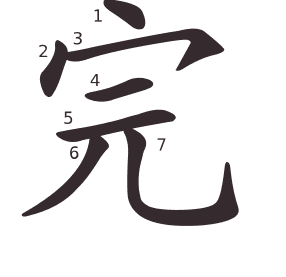
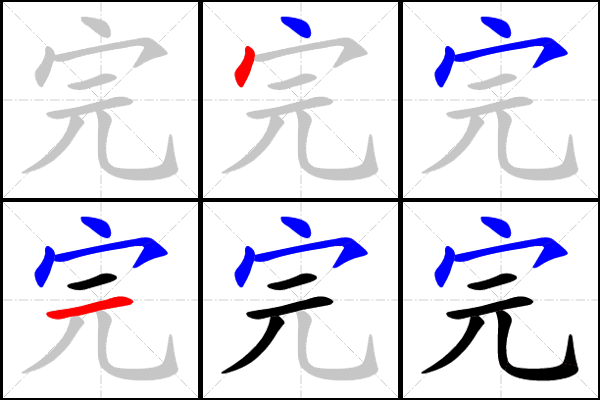 Show the animation
 Stroke data from Make Me a Hanzi, derived from the Arphic PL fonts under the Arphic Public License.
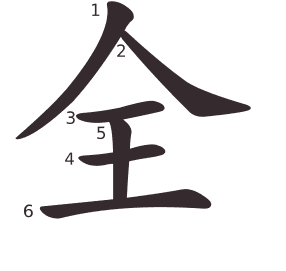
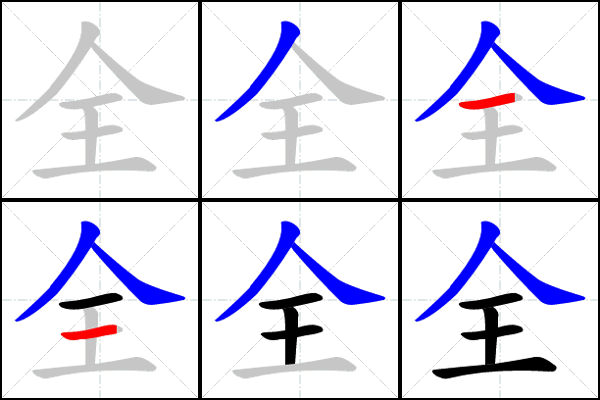 Show the animation
 Stroke data from Make Me a Hanzi, derived from the Arphic PL fonts under the Arphic Public License.
How it used to be written
完
-
 Warring States script 戰國.秦
 -
 Clerical script 東漢
 - See all 7 forms
全
-
 Warring States script 春秋晚期或戰國早期.晉
 -
 Clerical script 東漢
 - See all 13 forms
Forms, sources and dates: the 字形演變 database of 小學堂, Academia Sinica, public domain (CC0).
Examples
-
Bill和他的弟弟完全不同。
Bill and his younger brother are nothing alike.
-
一个完完全全的不及物动词既没有补语,又没有宾语。
A complete intransitive verb takes neither complement nor object.
-
今年的时尚潮流完全不同于去年。
This year's fashions are completely different from last year's.
-
他完全沉浸于家庭生活中,不想工作了。
He is totally immersed in family life and has no wish to work.
-
你在聚会中针对Lisa体重作出的评论是完全不适当的。
The remark you made at the party about Lisa's weight was totally uncalled for.
-
你完全是对的!
You're completely right!
-
你完全正确。
You are absolutely right.
-
你完全错了。
You are completely wrong.