
很
Stroke order
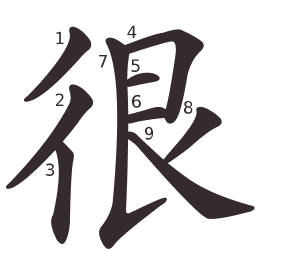
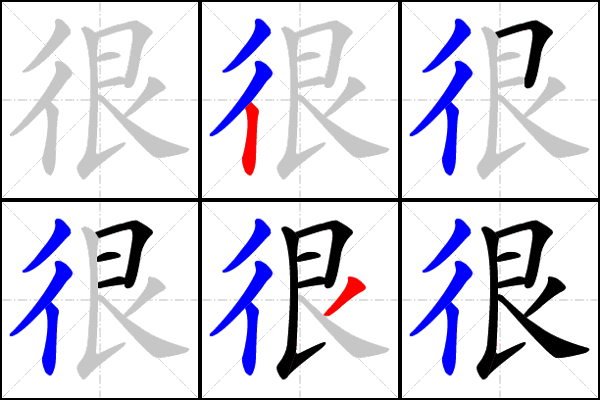 Show the animation
 Stroke data from Make Me a Hanzi, derived from the Arphic PL fonts under the Arphic Public License.
How it used to be written
-
 Warring States script 戰國.秦
 -
 Small seal script
Forms, sources and dates: the 字形演變 database of 小學堂, Academia Sinica, public domain (CC0).
Examples
-
很多人学日语是为了看漫画。
Many people study Japanese so they can read manga.
-
“你怎么样?”“我很好,谢谢。”
"How are you?" "I am fine, thank you."
-
“她很年轻吗?”“是的。”
"Is she young?" "Yes."
-
“洞里发生了什么?我很好奇。”“我一点也不知道。”
"What's going on in the cave? I'm curious." "I have no idea."
-
“这看上去很有意思。”Hiroshi说道。
"This looks pretty interesting," Hiroshi says.
-
5加10很简单。
It is easy to add 5 to 10.
-
Bill的朋友很多。
Bill has many friends.
-
Davis先生看上去很累。
Mr Davis looks very tired.